
Play with what appears
Clowning
Clowning begins with something simple: you play with what is already happening. You don’t need a character or a funny idea. The reality of what you are doing — what you notice, repeat, transform or reveal — is enough.
You don’t need “to be a clown” to clown. You need the ability to see your own actions clearly and follow them honestly. The clearer the action, the more freedom you have to play with it.
Clowning, at its core, is awareness, play and the courage to explore what appears — physically, simply, and without disguise.
Why clowning matters
Clowning trains a performer to stay connected to the moment — not through ideas, but through action. It reveals the relationship between attention and behaviour: how a simple movement becomes material the instant you notice it.
For improvisers, this is essential. Clowning develops timing, rhythm, responsiveness and the ability to turn the smallest event into creative material. For actors, it strengthens presence and makes choices clearer and more embodied.
Clowning is not separate from acting.
It is a way of acting that begins before character and before story.
How Impro Supreme approaches this
In my work, clowning is not a style or persona but a discipline of perception. You train yourself to notice what you are doing, understand how it reads, and play with it honestly.
This approach comes directly from the physical–attentive training that underpins Impro Supreme. It shares the same foundations as improvisation and physical acting: clarity, simplicity and the willingness to act without hiding.
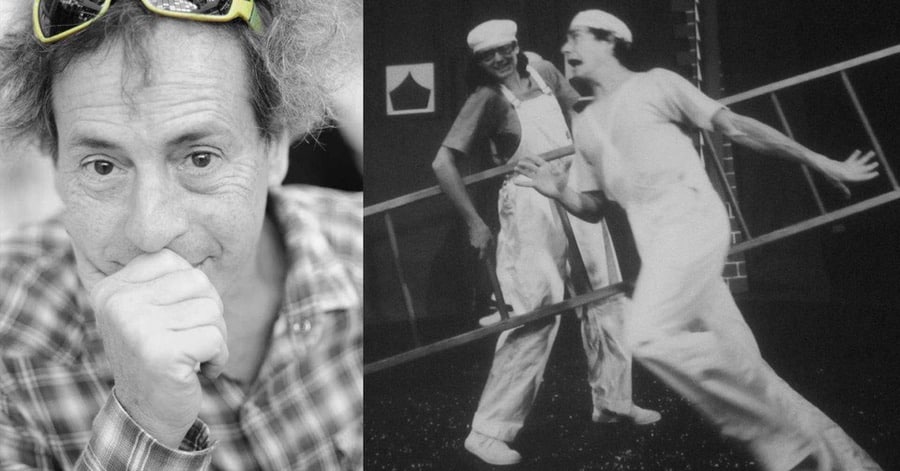
My own training with Ira Seidenstein was central in shaping this understanding. His influence appears in many of these reflections, alongside the developments that emerged through my own practice and teaching.
Articles and writings
Reflections on clowning as a physical, playful and creative discipline — including work shaped by my training with Ira Seidenstein. More articles to come.
- The path to freedom in clowning
 On how creating simple clown acts became the key to artistic freedom, and how years of training at Ira Seidenstein’s Quantum Clown Residency revealed the deeper foundations of clowning.
 - Meeting my mentor
 How meeting Ira Seidenstein became the turning point in my artistic life. Through his work I learned to show up and finally show my creative self.
 - A true clown master
 Why I consider Ira Seidenstein a true clown master – not for control or mystique, but for the clarity, craft and freedom he passes on to his students.

Go further
Explore clowning through workshops, online training and individual coaching.